
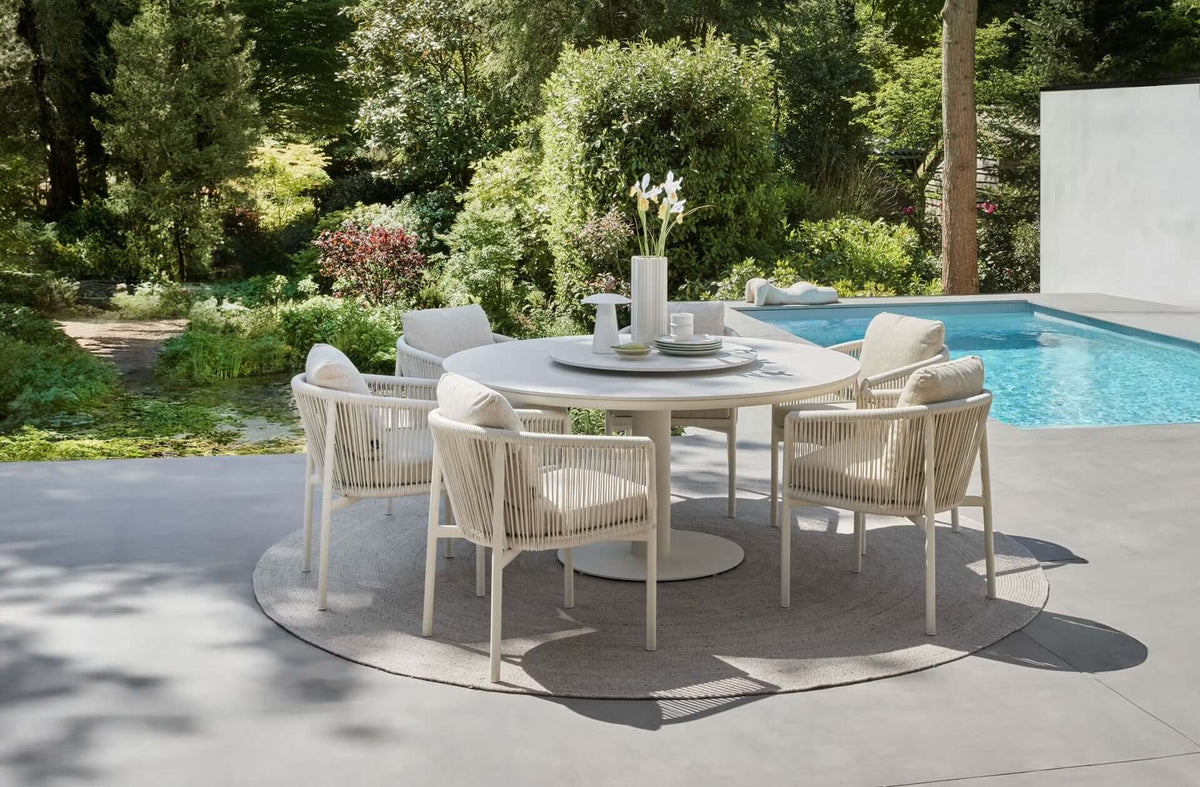
Outdoor wicker is not natural rattan, but a strong synthetic fibre that can withstand sun and rain. Apple Bee uses Biculair® wicker, for example: a weather-resistant, durable and recyclable HDPE fibre. Maintenance is simple; it mainly involves removing dust and dirt from the wickerwork.
In short
- Regularly brush or vacuum dust and leaves from the wickerwork.
- A few times a year clean with lukewarm water, a mild soap solution and a soft brush.
- Allow to dry thoroughly before replacing cushions or a cover.
Cleaning
- Remove the cushions and brush or vacuum dust, sand and leaves from the wickerwork.
- Make a soap solution with lukewarm water and a mild detergent.
- Brush the wickerwork with a soft brush in the direction of the weave.
- Rinse with clean water, for example with a garden hose on a gentle setting.
- Allow to dry completely, preferably in the sun and wind.
Tip: Is there bird droppings or resin on the wickerwork? Let the soap solution work on it for a while before brushing. This makes it easier to remove.
What not to do
- Do not use a pressure washer: this can stretch or loosen the fibres.
- Do not use hard brushes, abrasives or solvents.
- Do not pull on loose ends. If a fibre is sticking out, send us a photo.
- Do not place sharp objects or heavy items on the wickerwork.
For winter
- Clean the wickerwork and allow it to dry thoroughly.
- Preferably place the set under a roof or use a breathable protective cover. This leaves less dirt in the wickerwork.
- Make sure that water cannot remain in the wickerwork.
Frequently asked questions
Can wicker withstand rain?
Yes, synthetic outdoor wicker can withstand rain and sun. After a heavy downpour, allow it to dry before placing cushions on it.
What is Biculair® wicker?
The wickerwork that Apple Bee uses, among other products like the Cocoon. It is an HDPE fibre that is weather-resistant, comfortable, durable and recyclable.
How often should I clean the wicker?
Dusting can be done regularly. A thorough cleaning is usually enough two to three times a year.
